You’ve got a goal you’ve chased for years—something you care deeply about—but no matter how much effort you put in, you always fall short. You start strong, full of motivation and good intentions, but can never close the gap between where you are and where you want to be.
I’ve lived that cycle more times than I’d like to admit.
But here was the most frustrating part: some goals came easily. The more concrete, “check-the-box” kinds—like earning my master’s degree or training for a marathon—I could follow through on without a problem. But in other areas? No matter how determined I was, I’d stall out.
It felt like one of those old 70s cartoons where the character’s legs are spinning in circles but they’re not actually going anywhere. I was confounded. I kept asking myself, “What in the world is my problem?”
And my default answer?
Try harder.
But here’s what I eventually discovered:
Trying harder is a recipe for exhaustion, not success.
If something isn’t working, you don’t double down—you change the strategy.
After all, as the saying goes: “Insanity is doing the same thing over and over and expecting different results.”
I’d likely still be stuck on that hamster wheel today—but everything shifted for me during a quiet writing session when I got an idea that I believe was God-inspired—an idea that changed everything:
The Low-Hanging Fruit Framework™
And as I implemented this framework, for the first time, I began closing the gap and actually making progress—in a steady, sustainable way. Things that once felt impossible or overwhelming started to work:
Peace with Food
Overcoming perfectionism
Learning to be present with family and friends by implementing boundaries with work and technology
Getting control over my mind and my words
Rest
I started applying it anywhere I wanted to see growth—and little by little, I began to see fruit.
That one simple framework changed how I approached everything. For the first time, I had a clear, systematic way to close the gap—and my actions finally started producing real results.
It became a turning point—things finally clicked.
(I’ll be sharing more about it in my next post.)
How about you?
Is there an area of your life where you’ve been trying the same thing over and over—yet the results never change? Maybe it’s time for a new strategy… or even a new framework.
Have you ever felt like you just don’t have what it takes?
Like no matter how hard you try, you run out of answers, fall short on willpower, and wonder if you’ll ever make it?
I’ve been there so many times on my Peace with Food journey. And in those moments, this verse became an anchor for me:
“And God is able to make all grace abound to you, so that having all sufficiency in all things at all times, you may abound in every good work.” —2 Corinthians 9:8 (ESV)
This reminded me: I don’t need to have everything figured out in the moment. I just need enough for the next step.
God’s sufficiency means:
You may not have everything for the entire task
But you have enough for today
And enough to take the next step forward
So whatever you’re facing—remember this: you already have what you need for the next step. It may not feel like much, but in God’s hands…it’s enough. And as you keep stepping forward in faith, you’ll find that the provision you need will meet you along the way.
Do you ever wonder why you’re here—or what your unique mission in life might be?
That question intrigues me so much, because deep down we all know we are here for a purpose. It’s something at the very core of who we are: a God-given longing to understand why our life matters.
Out of my own intrigue with that question, I eventually wrote a booklet and developed interactive sessions I shared with junior high, high school, and even some college students. What amazed me most was how curious and engaged they were—open to explore, reflect on, and think deeply about the very same question.
That response reminded me of this truth:
There’s a longing inside each of us to know why on earth we are here.
The Core Message
Here’s the framework I shared with them—and one you can use too as you begin or continue discovering your Sacred Mission:
Identify your gifts and talents
Identify your passions and values
Since then, I’ve realized I would add two more important circles:
Identify your experiences — the highs, the lows, and the lessons learned along with the unique perspective and moral authority they give
Identify a genuine need — a place where your life can meet the needs of others through service
Picture a Venn Diagram with these four circles—where they intersect, you’ll often find powerful clues that point you toward your purpose and calling.
A Starting Point
Of course, this model isn’t perfect. But it’s a place to begin. And here’s what I always say:
If you don’t yet know your mission, then your mission becomes to discover your mission.
And the only way to do that is through experimenting. You won’t figure it out by only writing ideas on paper—you have to take action and try things. Sometimes what looks perfect in theory doesn’t fit in practice, and that’s okay.
The key is to keep moving forward. Because as the saying goes:
It’s easier to steer a moving car than a parked one.
Whether you’re just beginning to discover your Sacred Mission or have been pursuing it for years, keep leaning in. It’s a journey worth taking, because living out your purpose is what brings the deepest fulfillment. And along the way, you discover a beautiful surprise—it’s also the place where you experience lasting peace and joy.
And Scripture reminds us why:
It’s part of why we were created in the first place.
“For we are God’s handiwork, created in Christ Jesus to do good works, which God prepared in advance for us to do.” (Ephesians 2:10)
I once heard Billy Graham asked, “What surprises you most about life?”
His answer has stuck with me ever since:
“The brevity of life.”
Life is short. And it makes me pause and ask: Why am I here? Why are we all here?
I believe the answer is this: we were created for a divine purpose—a Sacred Mission.
Here are 3 truths that help me keep that front and center:
Y O U R D E S I G N
God handcrafted you—you are fearfully and wonderfully made.
Psalm 139:13–14
Y O U R A S S I G N M E N T
At the heart of it all, our primary purpose and assignment is to bring God glory.
Isaiah 43:7
Part of that includes the good works He’s already prepared—uniquely designed for each of us, shaped by our gifts, talents, wiring, and experiences.
What encourages me most is that no matter what happens—disappointments, detours, or even the messes we make ourselves—we can still glorify God. He never wastes our story, but redeems it for His purpose, our good, and His glory.
Y O U R T I M E I N H I S T O R Y
You’re not here by accident. God placed you in this time and place so you would seek Him and live out your purpose.
Acts 17:26–27
Your Sacred Mission is the unique, one-of-a-kind calling God has placed on your life.
It draws together your gifts, talents, passions, experiences—even your quirks and idiosyncrasies. It’s shaped by the story He’s written in you—the highs, the lows, the victories, and the struggles He has redeemed.
No one else has the same combination of wiring, circumstances, relationships, and opportunities you’ve been given. And because of that, no one else can fulfill your mission in the way you can.
It’s designed not just for your growth, but to glorify God and to bless others through your service and impact.
For me, I define success as:
Discovering that mission
Developing it
Faithfully stewarding it in a way that glorifies God and serves others
So what do you do if you don’t know what your mission is?
If you’re unclear about why you’re here or discouraged about where you find yourself, take heart! God has a plan and purpose for you. (Jer. 29:11) You were created on purpose, with purpose, and for a purpose—and you have a gift to bring to the world. We need your gift. We need YOU!!
Searching for your mission? In my next post, I’ll share practical ways you can begin uncovering it.
Nobel Prize–winning physicist Richard Feynman once said:
“The first principle is not to fool yourself—and you are the easiest person to fool.”
When I first read that quote, I knew he was talking about science, but what struck me most was the deep spiritual truth it revealed.
Over this past year, I’ve been walking through a season of spiritual transformation—leaning into honest self-examination and studying what Scripture says about the heart. As I’ve invited the Holy Spirit to shine His light on my life, it’s been sobering.
Jeremiah 17:9 says: “The heart is deceitful above all things; who can understand it?”
And Proverbs 16:2 (AMP) adds: “All the ways of a man are clean and innocent in his own eyes…but the Lord weighs the motives of the heart.”
So what do we do with that?
Jesus gives us direction. He tells us to “judge with righteous judgment” (John 7:24)—starting with ourselves. And He reminds us to “first take the log out of your own eye” (Matthew 7:5).
My Own Season of Self-Examination
In this season of examining myself—heart, mind, attitude, and behaviors—it’s been eye-opening. God uncovers things I was blind to, and just when I think progress has been made, He peels back another layer—like an onion.
Pride
Jealousy
Thoughts not in alignment with His Word
An unbridled tongue
And boy, oh boy, can it be painful.
What I’ve Learned
But as hard as it is, there’s something amazing that I’m seeing come out of the process:
Humility. You realize how difficult true change really is. While I am certain I’ll be working on this for the rest of my life, it brings hope when you see God changing you little by little.
Compassion. Facing your own sins helps you extend grace to others fighting their own battles.
Gratitude. Because you know without the Holy Spirit’s power, change would be impossible.
Freedom. Repentance can sound heavy or restrictive—but that’s a lie from the enemy. True repentance is what brings freedom, peace, and joy.
The Process of Sanctification
C.S. Lewis once said: “No man knows how bad he is until he has tried very hard to be good.”
How true is that?!
And Alexander the Great is said to have admitted: “I have conquered nations, but I have not been able to conquer myself.”
Both statements show the futility of trying to change ourselves in our own strength. But with the Holy Spirit’s power, what is impossible on our own becomes possible in Him.
Maybe you’ve felt God peeling back layers in your own life too—painful, yes, but also proof of His love and faithfulness. Be encouraged! And don’t stop cooperating with His transforming work, no matter how hard it may feel because we can rest in this promise:
“So then, my dear ones, just as you have always obeyed [my instructions with enthusiasm], not only in my presence, but now much more in my absence, continue to work out your salvation [that is, cultivate it, bring it to full effect, actively pursue spiritual maturity] with awe-inspired fear and trembling [using serious caution and critical self-evaluation to avoid anything that might offend God or discredit the name of Christ]. For it is [not your strength, but it is] God who is effectively at work in you, both to will and to work [that is, strengthening, energizing, and creating in you the longing and the ability to fulfill your purpose] for His good pleasure.” (Philippians 2:12-13 AMP)
One really big lesson I’ve learned on my Peace with Food journey is the difference between principles and methods.
So, what’s the difference?
This question takes me back to growing up on a farm…
So, we had an old pickup the farm hands called Ole Green. The cab was two shades of green—the light sandwiched between the dark—and the bed, which came from a different truck, was two shades of brown. With no muffler, when you pressed the gas it roared so loud you could hear it from miles away.
I loved driving Ole Green (grinding the floor shift gears came with the territory, at least for me it did) through my rural hometown (population 195)—flooring it so the whole town knew I was coming .
On summer days on the farm, it was perfect. But in no other circumstance would I have wanted it as my set of wheels.
Ole Green was a method—great for some things, terrible for others. But the principle—that vehicles get you from point A to point B—was still true.
And that little farm lesson reminds me of a bigger truth…
Principles are timeless truths—laws God set in place to govern the world, and they never change.
Think about gravity, or sowing and reaping. They don’t change. When you understand them and cooperate with them, your life bears good fruit. When you ignore or violate them, the consequences always come—sometimes gradually, sometimes suddenly.
But sooner or later they come.
Methods, on the other hand, are just strategies—the vehicles we use to best live out the principles. A mom of little kids might drive a minivan , an empty nester might love the freedom of a convertible , and someone in the city might get around just fine on a bicycle or scooter .
The point? Find the right fit for your season. If one method isn’t working or isn’t a good fit, you can change it—without abandoning the principle.
British mathematician George Box once said: “All models are wrong, but some are useful.”
I like to say it this way: “All methods are flawed, but some are useful.”
In Peace with Food, the main underlying principle is STEWARDSHIP.
The methods? They’re simply what works best for you right now—custom-fit to your season of life and designed to help you best live out the principle. None are perfect, but some are best suited to your situation.
So here’s the reminder: methods can and should (when appropriate) change. Principles never do. Hold on to the truth, and let the rest flex with your season.
Lately, I’ve been thinking a lot about friends, family, and others who have experienced life-shattering moments.
The kind that changes everything in an instant (or even over time).
A diagnosis or accident.
A loved one taken too soon.
A betrayal.
A loss.
A dream gone.
A relationship severed.
Moments like these shake us to our core—and they force us to wrestle with some of life’s deepest questions.
One question I keep coming back to is this:
What perspective am I living from?
At the core, there are two main ways we tend to see the world:
P E R S P E C T I V E
My reward is in this life. The temporal. The here and now.
P E R S P E C T I V E
My reward is in the next life. The eternal. The unseen.
When life shatters, Perspective 1 quickly loses its shine. If my reward is here, then my pain is just… pain—and even if there’s some redemption, it’s only temporary. But with an eternal perspective, suffering is redeemed in ways that outlast this life.
God uses it to deepen my faith, shape my character, draw me closer to Him, and equip me to encourage others in their suffering. In His hands, pain becomes a tool that forms me more into the image of Christ.
This is where perspective changes everything. And the one I choose—consciously or not—shapes everything:
How I live.
How I love.
How I forgive.
How I sacrifice.
How I endure suffering.
It shapes what captures my focus, time, affections—and even what I invest my energy and resources in. It influences how I treat people and how I respond when life doesn’t go the way I hoped or expected.
Because if this life is all there is, then my desires and ambitions easily take center stage. I’ll be tempted to rely on my own strategies and understanding to chase the “best life” I can build for myself and maybe even for others.
But if eternity is real—if the unseen is truly more real than the seen—then I can live differently, with my eyes fixed on what lasts forever.
As 2 Corinthians 4:18 (AMP) reminds us:
“So we look not at the things which are seen, but at the things which are unseen; for the things which are visible are temporal [just brief and fleeting], but the things which are invisible are everlasting and imperishable.”
We all have defining moments. Sometimes it’s a single event; other times it’s a turning point that sets us on a new path.
For me, one of those moments came my freshman year of college at Oral Roberts University. I was sitting in chapel when the speaker said a simple phrase that changed everything:
“You can be free.”
That was the day my search for peace with food turned into a pursuit of freedom.
Now, four decades later, I’ve learned a lot about what freedom truly means.
One of the most profound truths is this: as a follower of Christ and child of God, freedom isn’t something I have to earn, achieve, or one day arrive at.
It’s already part of my identity—the moment I received God’s gift of grace, I was set free. That was my first step to true spiritual freedom.
FREEDOM 101 {Justification}
This first level of true freedom is what I call FREEDOM 101—but the theologically accurate term is JUSTIFICATION—being made right with God and set free from sin. I use “Freedom 101” as a memory aid to help keep it clear in my head, and I share it in case it helps you too.
Think of Freedom 101 similar to an acorn. Inside, it already contains all the DNA needed to become a mighty oak.
Freedom 101 {Justification} happens instantly. The moment you receive God’s grace and put your trust in Christ, God plants an imperishable seed—His very life, His spiritual DNA—inside of you. You receive a new nature that already includes everything you need to live a godly life. (2 Peter 1:3)
At this stage, Romans 6:18 is true of you:
“You HAVE BEEN set free from sin and HAVE BECOME slaves to righteousness.” (See also: 1 Peter 1:23; 2 Corinthians 5:17; Colossians 3:3.)
FREEDOM 201 {Sanctification}
But living out that freedom in a body still prone to weakness, temptation, and fleshly impulses? That’s different. Scripture calls it SANCTIFICATION. I sometimes call it Freedom 201—again, as a memory aid to keep it straight in my head.
Think of Freedom 201 {Sanctification} similar to the oak tree. What began as a small acorn matures, grows strong, and eventually bears abundant fruit.
Freedom 201 happens gradually, over time and in degrees, as you work out in your actions and thoughts what God has already planted inside of you as described in Philippians 2:12-13 (NIV):
“Work out your salvation with fear and trembling, for it is God who works in you to will and to act in order to fulfill his good purpose.” (See also: Romans 8:29; 2 Corinthians 3:18.)
2 Corinthians 3:18 (AMP) describes it this way:
“And we all, with unveiled face, continually seeing as in a mirror the glory of the Lord, are progressively being transformed into His image from [one degree of] glory to [even more] glory, which comes from the Lord, [who is] the Spirit.”
Think of Freedom 101 as the prerequisite to Freedom 201: one happens instantly, the other unfolds gradually as the Spirit transforms you.
As we cooperate with the Holy Spirit’s sanctifying work through surrender and obedience, we are continually being transformed—growing in Christlikeness and learning to walk in greater freedom.
If you’re searching for freedom—whether with food or anything else—this truth is for you: freedom is not just possible, it’s your identity as a child of God.
“It is absolutely clear that God has called you to a free life.” —Galatians 5:13 (MSG)
If you’re ready to walk in that freedom, don’t attempt to go alone—invite someone you trust, who will help you walk it out biblically, to journey alongside you.
In the days ahead, I’ll be sharing more about what this journey has looked like for me—principles of peace with food, spiritual growth, and personal growth—because I’ve found they’re all woven together.
My prayer is that as you read, you’ll find hope that freedom is possible for you too.
…And in my next post, I’ll share a foundational lesson I’ve learned: the difference between principles and methods—and why knowing the difference can save you years of frustration and time (with a little help from a farm pickup truck called Ole Green ).
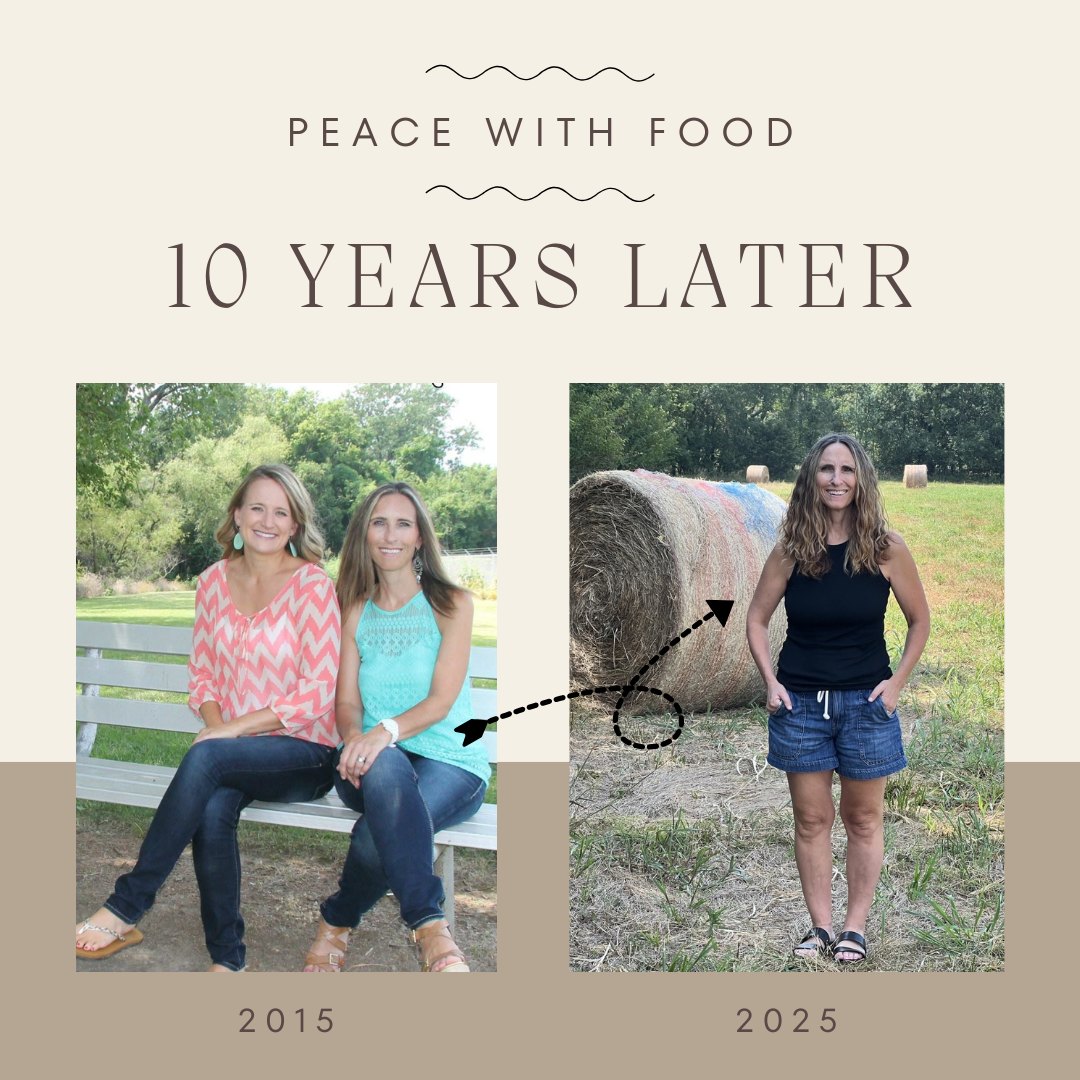
Ten years ago, Lara and I published Peace with Food.
That season was incredibly special. So many of you—especially those in this community—cheered us on, shared what we were doing, and supported the message in ways I’ll always be grateful for. 🎉
When we first released the book, the response was overwhelming. One of the most common things we heard was: “I don’t have peace with food… but I want it.”
That desire—for peace, for freedom—has stayed with me.
And the more I’ve experienced that freedom personally, the more I’ve wanted others to know that it’s possible for them too. That desire hasn’t faded over the years—it’s deepened.
So as I’ve reflected on the past decade, I found myself wanting to share again. Not by writing a brand-new book, but by offering an updated version of what I’ve learned—right here.
Think of this as a “10 Years Later” reflection.
What’s changed. What’s stayed the same. What’s helped. What might help you.
This is a longer read—but it’s intentionally broken into short sections so you can move through it at your own pace.
So if you’re still searching… still trying… or still somewhere in the middle of the journey—
This is for you. 🌱
=====================
CHAPTER
Why Peace with Food Matters
My journey with peace with food began in the summer of 1985 —and 40 years later, I can say it’s not just about eating “better” or losing weight.
It’s about freedom. Because without it, we often feel anything but free—frustrated, anxious, ashamed, or caught in a cycle of defeat.
But with peace with food—including peace with your body—you can experience freedom, even in the face of physical challenges like illness, injury, or simply living in a body that doesn’t match what you’d hoped for in ways beyond your control.
It doesn’t mean giving up on what you can improve—it means accepting what you can’t, while faithfully stewarding what you can.
And that’s key, because it’s all about stewardship—living out your Sacred Mission, the unique calling God designed, wired, and positioned you to fulfill, in the body you have and within the limited time you’ve been given on this earth to fulfill it.
When food and body image no longer take up the mental, emotional, or physical space they were never meant to, you can become free to fully live out the mission He’s entrusted to you. One of purpose and significance.
This isn’t about reaching your goal weight or having the “perfect” body. It’s about something way bigger than that.
It’s about faithfully stewarding the life you’ve been given so you can run the race set before you…
and finish well.
=====================
Quick disclaimer:
I’m not a doctor, scientist, or medical expert, nutritionist or fitness guru—just a lifelong student sharing what’s helped me. I definitely don’t have it all figured out and am still learning and experimenting as I go—so consider this just a snapshot of where I am in the journey today.
Please do your own research, advocate for yourself, and work with a trusted practitioner who stays current on the latest science and wisdom.
Also—everyone’s journey is different and we all have a unique race to run. What works for one person may not work for another. My hope is that you’ll take the principles—the timeless truths—and apply them in a way that fits your unique season and circumstances.
The specific strategies I’ve used? They’re just that—strategies. Some may resonate with you, others may not. And what works for you today might need to be adjusted tomorrow. Take what serves you—use it as is, tweak or modify it—and feel free to leave the rest.
And above all… Follow Peace.
=====================
CHAPTER
P E A C E W I T H F O O D 1 0 1
Peace with Food was a snapshot of our journey a decade ago, built on simple, foundational truths—what we called the peace principles.
In the book, we shared how to use those principles to identify the right strategies for your current stage and season, crafting a custom-designed plan tailored to your wiring, circumstances, and goals.
These timeless truths can be applied to any eating or fitness strategy—because Peace with Food isn’t about a specific plan; it’s about knowing how to be appropriate in the moment so you can identify and personalize the strategies that work best for you.
Here are some of the principles I’ve come to rely on most:
The Power of Your Posse – Don’t go it alone. Community matters.
Know Yourself – Self-awareness of your personality, preferences, patterns, values, and current situation is key.
Get Wisdom – Educate yourself, be curious and ask questions, seek out mentorship, and experiment to learn what works for you.
Your Unique Path – Create a plan that fits you, not someone else’s formula.
The Power of Habits – Small habits, repeated consistently, create lasting change.
Temptation: Easier to Avoid than to Resist – Don’t rely on willpower; set up guardrails.
Follow Peace – Let peace be your compass, even when the path looks unconventional.
The early days of Peace with Food were about breaking free from food addictions—escaping the tormenting cycle of obsession and constant thoughts about food—and learning to live by the peace principles.
That freedom laid the foundation for the next level: learning how to walk it out when everything changed in midlife and my body no longer responded the same.
=====================
CHAPTER
P E A C E W I T H F O O D 2 0 1
10 Years Later: Here’s Where I’m At
At the start of the last decade (6 months after we published the book), menopause hit—and it felt like the rug was pulled out from under me. What used to work… suddenly didn’t. The rules changed overnight, and I found myself in a cycle of trying hard and falling short, over and over. Talk about frustrating.
Eventually, I hit a point of desperation. I still believed in the core Peace with Food principles and was doing my best to live them out—but none of my strategies were working, and I felt completely stuck. That’s when I realized I needed a complete transformation.
So last year, I began a full health reset*—spiritual, mental, and physical. Since then, I’ve:
Regained hope
Lost the stubborn menopause weight that lingered for years—40 lbs since my reset
Returned to my healthy lab ranges from my pre-menopause years
Gained next level strategies, skills, and mindsets that completely reshaped how I approach health and wellness
Most importantly, I’m seeing transformation—spiritually, mentally, and physically—along with deeper wisdom, steadier peace, and renewed strength
This is my Peace with Food 201 version—born out of real-life struggles and shared in hopes it encourages or equips someone else on the path.
The following are some of the key shifts that helped me get here
*(Throughout this post, I’ll mention things like my current eating habits, supplementation, workouts, and my health reset. If you’re curious about the specifics, I share more in my Facebook posts on June 1 and June 11.)
=====================
CHAPTER
Get a Coach for Your Specific Need
Health, fitness, and medicine are vast fields—no one person has all the answers. I had to find the right people for the right needs: hormones, thyroid, strength training, nutrition, longevity, etc. In many of those areas, that meant finding coaches—experts who could guide me with targeted support and accountability.
As Fast Company put it,
“If coaches have one thing in common, it’s that they are ruthlessly results-oriented.”
If you’re not getting the results you want, it might be time to bring in someone who can help you bridge the gap—someone with a proven track record in solving the specific problem you’re facing.
(BTW: If you’re thinking of getting a coach—consider doing it sooner rather than later. I waited too long and only took action when I was desperate. I wish I’d done it earlier.)
=====================
CHAPTER
Mindset Renewal
I began my health reset with one ultimate goal: transformation.
Romans 12:2 tells us how:
“Be transformed by the renewing of your mind.”
If I truly wanted lasting change, I knew it had to start with how I think, renewing my thoughts with God’s truths.
My biggest mindset renewal was trading a perfectionist mindset for a Low-Hanging Fruit™ mindset.
For decades, perfectionism—the classic all-or-nothing mindset—was my downfall. I’d worked on it for years and, while I made small gains, I could never seem to gain real momentum or lasting change.
After countless cycles of trial and error (with way more error than I’d like to admit ), I kept hearing my mentors talk about the power of taking small steps paired with consistency. Their wisdom was solid—and the principle behind it came straight from Scripture. Luke 16:10 says, “Whoever is faithful in very little is also faithful in much.”
The message was clear: if I couldn’t steward the small things well, how could I expect to handle the bigger things?
I knew I needed to build consistency—but the challenge was figuring out how to actually do it. I do best with clear, tangible frameworks, but since I couldn’t find one that fit, I created my own—simple, doable, and finally effective in helping me live out that principle.
I call it The Low-Hanging Fruit Framework™. It helped me finally stay faithful and consistent in the little things—building momentum not just in food and fitness, but in life. Small changes that, over time, compound into big results.
=====================
CHAPTER
Identify Your “ONE THING”
Ever feel overwhelmed because everything needs fixing—or like you don’t even know where to start? That “Never Enough” feeling used to overwhelm me. And yes… every time I think about that frustration, that song from The Greatest Showman starts playing in my head.
There were so many changes I needed to make—and so many ‘solutions’ being thrown at me as I searched for answers—that it became overwhelming. Total analysis paralysis.
Eventually, I had to stop the madness and ask myself the question highlighted in Gary Keller and Jay Papasan’s book The ONE Thing:
“What’s the ONE Thing I can do such that by doing it, everything else will be easier or unnecessary?”
I used that question to create a simple focus framework that helped me pinpoint the ONE THING that would have the greatest impact on my goal. Once I found it, I gained clarity—and was off and running.
=====================
CHAPTER
My Power Duo
Combining these two frameworks has helped me get clear on where to start—and then take immediate action, whether the road ahead feels overwhelming or just uncertain.
These two simple questions can help you identify your next step:
Feeling confused or ambivalent about where to start? That’s your cue to find your focus—the most leveraged action.
Feeling overwhelmed—or like it’s just too hard? That’s your cue to make the first step smaller. Go for low-hanging fruit.
Here’s a simple example:
Let’s say life feels chaotic and out of control. Every area feels like a mess, and you’re completely overwhelmed. So… where do you begin?
Start by finding your most leveraged action—the one thing that would make the biggest difference and get the ball rolling.
You decide it’s cleaning your house.
But your house is really messy, and the thought of tackling it all feels paralyzing.
That’s your cue: make your first step smaller.
So instead of cleaning the whole house, you start by choosing a 5 minute task such as making your bed or clearing off the kitchen counter. Just one small, doable action.
And once you do? You’ve broken through inertia and get a little inspired—and as you keep taking action you start building the confidence that real change is possible.
One thing I’ve come to believe deeply: peace with food is a journey, not a destination. You don’t arrive all at once—you grow into it, like a baby gradually maturing into adulthood, experiencing deeper and more consistent levels of peace over time.
After years of making 1% changes in this area, I’m finally seeing the compounding effect.
In Peace with Food, you can see what my eating looked like at the time. But today?
My habits are completely different. I’m eating more whole foods, prioritizing protein, gut health, and fiber—while cutting back on the rest. And for that, I’m incredibly grateful… and hopeful for continued growth and progress. (That said, I still have a lot of room for improvement.)
If you’re still on the journey, take heart—you can experience the same transformation, one small step at a time.
Alongside nutrition, I’ve added some targeted supplements that support my unique needs in this season—especially for bone strength, muscle growth, brain health, energy, and long-term health.
Just aiming to get a little better every day.
=====================
CHAPTER
GLP-1* + Reverse Dieting + Fasting
Over a year ago, I found myself in a pit that felt deeper by the day. A decade of working against my hormones had finally caught up with me—excessive weight gain, labs no longer in the healthy range, insulin resistance, concerning test results, and a growing sense that I had somehow “lost” myself.
(Btw, insulin resistance is no joke.)
Up to that point, I had always held on to hope—even after years of spinning my wheels—but when I unexpectedly gained an additional 18 pounds in a short amount of time, suddenly I felt like I was in a pit I couldn’t get out of.
What made it even harder? I knew the risks. Years of research had made me well aware of the dangers of obesity and poor metabolic health—and my mom had recently passed from complications related to the latter. The potential comorbidities weren’t abstract anymore. They were personal and pressing.
I couldn’t ignore it any longer. It was time to act.
I set out to return to a healthy weight range and improve my labs—in a way that prioritized sustainability and healing from the inside out: improving insulin sensitivity, addressing prediabetes, restoring my metabolism, and preserving and building as much lean muscle mass as possible for long-term health and longevity.
After months of searching for a solution that aligned with my goals, I joined a coaching program that combined GLP-1s (an FDA-approved medication that must be prescribed and monitored by a medical provider – an example is Ozempic) with reverse dieting and fasting.
I began a low dose of GLP-1 to help address insulin resistance, and give myself a leg up after years of stalled progress. At the same time, I implemented reverse dieting—gradually increasing my daily calories to restore and support metabolic function—paired with strategic fasting.
Reverse dieting was a breakthrough.
All my life, I’d been conditioned by diet culture to believe that eating less was always better. My journey began back in the ’80s—an era of extreme (and often bizarre) trends: the grapefruit diet, the cabbage soup diet, and of course, SlimFast shakes for two meals a day and a “sensible dinner.”
For me, it was Weight Watchers or rigid calorie counting—1,200 a day, to be exact! Later came Atkins, Paleo, and Keto.
(Not saying any of these diet plans are bad—just sharing what I tried. Looking back, I was obviously implementing them wrong, consuming too few calories.)
Because weight loss had always felt so difficult, I was convinced my TDEE (total daily energy expenditure—the number of calories your body burns in a day) was only 1,200. Years of under-eating likely slowed my metabolism to that point. My coach assured me my TDEE was at least 1,800–2,000 cals. I was skeptical—and afraid to eat that much.
It took time to let go of the deeply ingrained scarcity mindset I’d built during nearly a decade of spinning my wheels. But nothing else had worked, so I thought, “What do I have to lose?” I chose to borrow his belief and trust his expertise.
To my surprise, he was right. Eating closer to my true TDEE not only helped revive my metabolism—it also broke the binge-restrict cycle I had lived in for decades.
My body had been underfed for so long, and eventually… it pushed back. It had been trying to tell me something all along.
I followed his guidance and gradually worked my way up to 2300 calories/day—without gaining weight. What?! Yep… no weight gain. It wasn’t until I hit 2400 that I started to see the scale move up.
These days, I typically eat 1,800–2,000 calories on non-fasting days—and a bit more on feasting days—to support my body composition goals: losing fat while building muscle for long-term strength and vitality. I haven’t yet reached my goal, but because protecting muscle is a top priority, I’m committed to the slow and steady path.
When a DEXA scan last summer revealed low bone mass, it lit a fire in me. I’m now on a mission to rebuild both muscle strength and bone density.
*GLP-1s are not for everyone, and their misuse can be harmful. As with any medication, there are risks. If you’re considering them, be sure to do your own research—exploring both the pros and cons, as well as their proper use—and consult a qualified healthcare provider to determine if they’re right for your specific needs and goals.
=====================
CHAPTER
Build & Preserve Muscle and Bone Density
To support my muscle and bone-building goals, I’ve made lifting heavy 3x/week and getting at least 120 grams of protein daily part of my non-negotiables.
As for the rest of my regular exercise…
Thanks to my dog, I get two built-in walks a day with a weighted vest. I also do 2–3 SIT (sprint interval training) sessions per week—three 30-second all-out bursts, each followed by 2–4 minutes of full recovery.
My go-to moves? Single-leg hops (right leg), single-leg hops (left leg), and pushups—one round per interval, and I’m done.
=====================
CHAPTER
Measure Body Composition, Not Just Weight
For years, the # on the scale was my main metric. But now, my focus has shifted to body composition—specifically, preserving lean muscle mass and being at a healthy level of body fat for strength, longevity, and overall well-being. To help with this, I’ll use a macro tracker to stay aligned with my goals.
As for tracking body composition, if you’re new to this, here are some common options:
A DEXA scan—considered (by some) the gold standard for measuring body fat, muscle mass, and bone density—available at some medical offices or wellness clinics.
An InBody scan or similar body composition analyzer—often available at gyms, wellness centers, and some functional and traditional medicine clinics.
Even a home scale that estimates body fat and muscle % (though less accurate) can help you monitor trends over time.
The point is to keep body composition in mind—because as Peter Drucker, the “Father of Modern Management,” said: “If you can’t measure it, you can’t improve it.”
=====================
CHAPTER
Optimize Hormones + Thyroid
I learned the hard way: when it’s you vs. your hormones, your hormones will win every time. So, in the spring of 2024, I began the process of optimizing mine through bioidentical hormone replacement therapy (BHRT).
While BHRT helped me begin optimizing my hormones, my thyroid still needed additional support. That summer, lab work once again confirmed an underactive thyroid.
But this time, I was determined to finally address it and find a real solution.
Even with proper nutrition, hypothyroidism typically isn’t resolved through diet alone—it often requires medical intervention. For me, that meant thyroid medication. I also support my thyroid naturally with 3 Brazil nuts a day (a great source of selenium). And a great crunchy snack.
Today, my thyroid labs are in a healthy range—and I finally feel like my metabolism is moving in the right direction.
=====================
CHAPTER
Fasting + Prayer =
I’ve fasted for decades as a spiritual practice—but when I learned the health benefits too? Game changer.
I’ve spent much of my life gaining and losing weight. In the past, even when I had dozens of pounds to lose, I could always get the scale to budge with effort.
But when menopause hit, everything changed. Suddenly, even losing three pounds felt like a major accomplishment—and sometimes, no matter what I did, there was zero progress. There was no margin for error.
When nothing else worked, strategic fasting—with guidance from my mentor—became the turning point in overcoming my menopause weight struggles.
But fasting didn’t just help with fat loss. Years ago, it began breaking my carb cravings and addictions—long before I understood its physical benefits.
These days, I fast strategically for both spiritual and physical reasons. I still enjoy carbs (in-bounds feasting is actually what helps keep me in the game and stay consistent, as well as prevent the infamous out-of-control spiral), but protein has become my go-to—and I genuinely don’t crave carbs like I used to. I’m convinced fasting is a big reason why.
Fasting alone offers powerful health benefits—but when paired with prayer? It unleashes a whole new level of power—spiritual, mental, and physical. (See Isaiah 58)
**Fasting—and many of the strategies I’ve shared—should only be considered after you’ve done your own research and then discussed it with a qualified healthcare provider to see if it is the right option for you.
=====================
CHAPTER
Get Help From God
While I spent hours researching, reading/skimming studies, and learning from experts, some of the most powerful breakthroughs came from seeking God and His wisdom.
At the root of my food addiction was deeper bondage—and only Jesus could break it.
Regardless of whether the bondage we face is spiritual, mental, or physical—unhealthy eating, gossip, greed, porn, pride, anxiety, or anything else—bondage is bondage.
A surrendered heart is what opens the door to experience His freedom. As John 8:36 says, “Whom the Son sets free is free indeed.”
Yes, get wisdom. Yes, partner with professionals. Yes, get your POSSE.
Do your part. But never forget: true and lasting freedom starts with Jesus.
He alone is the bondage breaker.
=====================
Threading It All Together
=====================
CHAPTER
Systems Make It Stick
If you’re feeling stuck, the problem may not be motivation or effort—it might be a faulty system, or no system at all.
As W. Edwards Deming said, “A bad system will beat a good person every time.”
Good systems reduce decision fatigue, protect your mental energy, and build in guardrails. They also protect you from unnecessary temptation. And they protect you from yourself!
Systems create momentum and ultimately they create wins. The right systems do the heavy lifting—so you don’t have to white-knuckle every decision.
Here are a handful that have helped me:
Get Your Posse – The Ultimate Autopilot – The people you surround yourself with shape your default behaviors. Like an inner tube drifting on a lazy summer lake, your POSSE gently nudges you—often without you realizing it.
Whatever direction they’re heading, you are too whether you realize it or not. So be intentional: find communities moving in the direction you want to go—and immerse yourself there.
But remember, your POSSE is built one relationship at a time. So who should be in yours? Think mentors, amigos, and mentees who not only share your goals but also your values and heart.
And within those circles, make room for the kind of inner-circle friends C.S. Lewis described as the “What! You too? I thought I was the only one!” kind—those rare connections who truly get your wiring, who are like Jonathan was to David—and David to Jonathan, and who remind you that you’re not alone. They’re priceless.
Exercise – Choose the time of day you can be most consistent—then commit and make it non-negotiable. Lifting isn’t my favorite (even though it’s the most important workout for me at age 57), so I don’t give my brain a vote—I just front-load it in the morning and get it done ASAP.
One and done, baby.
If you’re someone who prefers working out with others, make an appointment to exercise with a workout buddy to help keep you accountable.
Eating Habits: Stack the odds in your favor – Clear out tempting foods, stock your space with healthy options, and keep them where you can see and grab them easily. (I’ll even snack on veggies I don’t love—if they’re visible and prepped, like sitting out on the kitchen island ). Know your weak spots, then build boundaries to help you stay in-bounds. Do for yourself when you are strong what you can’t when you are weak.
Mindset Renewal – Have a go-to Scripture ready to meditate on (recite and reflect on) whenever you feel triggered or off-track—whether it’s negative thoughts, unnecessary snacking, or the urge to scroll during downtime. You can also pair a Bible verse with a recurring cue in your day.
For example, I pray a specific scripture every time I hear the train near my house—which happens multiple times a day. Meditating on God’s Word is what transforms us, so make truth easy to access and let His Word continually wash over your mind.
Wholeheartedly Seek God – Jeremiah 29:13 says, “You will seek me and find me when you search for me with all your heart.”
When we seek God with a sincere and surrendered heart, He promises we will find Him. We won’t do it perfectly—but when we stumble, we can seek His grace. And when we sin, being quick to repent is part of the process that leads to sanctification (God’s work of shaping us to be more like Christ).
This is how true transformation happens—deeply, from the inside out.
How to begin? If this is new for you (or you’re still trying to make it a habit), remember the principle of low-hanging fruit: start small and simple.
Just a few quiet minutes in His Word and prayer a day.
To help it stick, anchor it to something you already do—like enjoying your morning cup of Joe.
Sleep Routine – Parents of young kids are onto something: a simple, consistent bedtime routine works. Kids tidy up, take a bath, brush their teeth, and say their prayers—usually at the same time each night.
Turns out, grown-ups need wind-down cues too. I figured, why reinvent the wheel? So, my routine looks pretty similar. After years of struggling with sleep and trying to dial it in, I added a sleep tracker—and just gamifying it is helping me make small changes that are improving both my sleep score and overall rest.
Weekly Rest – Choose a day (or even half a day) to unplug from work and technology and intentionally connect with your loved ones and do what restores you. Systems aren’t just for productivity—they’re for rest too.
=====================
CHAPTER
If you’re on your own journey of peace with food…
Wherever you are on the journey—starting out or circling back—you’re not alone, and you’re never beyond help.
Freedom is possible. Just keep showing up. When you fall down, get back up. Failure isn’t the end—it’s actually part of the process.
In those moments of struggle, God can meet you right where you are. He offers wisdom for your next step and the power to bring real, lasting change—from the inside out.
Because true transformation isn’t just about changing habits—it’s about living your identity and becoming the person who you were designed to be.
P.S. If you’ve been on a similar journey, I’d love to hear what’s helped you most—or where you’re feeling stuck. We’re better when we learn from each other. Please feel free to reach out if you need encouragement or support.
I wish I’d known this in my 30s. But since I can’t go back, I will pay it forward.
DISCLAIMER:
I’m sharing my experience, not medical advice. Do your own research and partner with a clinician experienced in bone health—especially women’s bone care. While I’m grateful for the role traditional medicine plays in acute care and diagnosis, this post is about adding an extra layer of proactive screening.
Last year—three days before my 56th birthday—my first DEXA scan revealed osteopenia (low bone density, a clear warning that I’m on the path toward osteoporosis), even though I felt perfectly fine.
That wake-up call was a blessing in disguise:
I was struck by how serious hip-fracture outcomes can be (see links below), relieved to learn they’re largely preventable, and sobered to discover that over half of Americans aged 50+ already have low bone density. I resolved to reverse my diagnosis, sparking a full 180° in my health journey—pursuing wellness, longevity, and sharing what I learn with others. Over the past year, here’s some of what I’ve discovered:
WHO NEEDS TO PAY ATTENTION?
Women in perimenopause and beyond (estrogen decline accelerates bone loss)
Anyone with past stress fractures or long-term steroid use
Folks on restrictive diets, malabsorption issues, or low BMI
People who sit most of the day and skip weight-bearing exercise
Those with a family history of osteoporosis or hip fractures
Anyone invested in longevity and strong bones
WHY EARLY SCREENING MATTERS
DEXA scans take just minutes, are noninvasive, and use very low radiation—about the same as a few hours of natural exposure.
Traditional guidelines generally recommend starting at 65, but many functional-medicine and integrative experts advise a baseline in your 30s or early 40s—they say after 65, “the horse is out of the barn.” By then it may be too late.
If insurance doesn’t cover it, out-of-pocket costs typically run $70–$100—an investment that could spare you the expense and hardship of a hip fracture. (I paid $70 out-of-pocket at my local imaging center.)
THE 5-POINT GAME PLAN THAT TURNED ME AROUND
To craft my custom-designed plan, I pulled the most-cited strategies—what I refer to as the “common threads”—from leading experts and then tailored them with my practitioner. This approach has worked for me, but bone health is nuanced, so please do your own research and adapt with professional guidance. I built these habits one at a time—starting with #1 and only moving on once the previous habit felt firmly in place.
Build Your POSSE
• Seek providers who stay current on bone-health research
• Help others on their wellness journeys
• Lean on friends for accountability and encouragement
Mindset – Transformational Over Transactional
• Commit to the long game—reversing low bone density takes months (or years)
• Expect—and learn from—setbacks
• Be ok with tiny steps that seem insignificant
• Replace perfectionism with curiosity: “What can I learn from this?”
Protein Is Non-Negotiable
• Aim for ~1 g per pound of desired body weight daily
• Front-load every meal/snack with 20–30 G protein (this stategy gave me the “biggest bang for my buck” in hitting my protein goals)
Resistance Training Is Also Non-Negotiable
• Weightlifting/bodyweight exercises, working up to 3×/week (Be patient! It took me 9 months to hit 3x/week regularly)
• I also wear a weighted vest and do 50 single-leg hops per day (check with your practitioner first!)
• Always clear new exercises with your practitioner first, then work with a qualified trainer—or knowledgeable coach—to nail proper form, since minimizing injury risk only grows more crucial as we age.
Micronutrients Matter
Focus on adding more whole foods—especially calcium-rich sources (target ~1,200 mg/day of calcium, or as your practitioner advises)
Supplement to fill gaps:
– Magnesium
– Vitamin K₂
– Vitamin D (include a healthy fat—I take mine with with Omega-3s)
– Creatine (Supports muscle, bone, and brain health)
As Dr. Peter Attia says, “The best time to treat a disease is before it happens.” Osteoporosis is indeed a disease, and preventing it starts long before diagnosis. Bone health is a lifelong project, and the sooner you begin, the more you safeguard yourself against fractures and low-density risks.
Had I not gotten a DEXA scan well before the typical 65-year-old recommendation, I shudder to think where my bone health would be in nine years.
If you’re in your 30s or your 60s (or somewhere in between!), consider booking a DEXA scan now—whether through your primary-care doctor, a walk-in imaging center, or a functional-medicine clinic—as part of a comprehensive plan for strong bones and a vibrant future.
No matter your medical tradition or philosophy, early detection gives you time to act. I’d love to hear what you learn on your journey—drop your questions, experiences, or tips below!
“If you fall and break your hip, your chance of death in 1 year is 30% WITH surgery… if you’re not healthy enough to have surgery, 79% will die in one year” ~Dr. The Pause Life by Dr. Mary Claire Haver
 I’ve lived that cycle more times than I’d like to admit.
 I was confounded.
  I kept asking myself, “What in the world is my problem?”
 Try harder.
 The Low-Hanging Fruit Framework™
 Peace with Food

 “And God is able to make all grace abound to you, so that having all sufficiency in all things at all times, you may abound in every good work.” —2 Corinthians 9:8 (ESV)
 You may not have everything for the entire task
 There’s a longing inside each of us to know why on earth we are here.
 The Core Message
 Identify your gifts and talents
 Identify your passions and values
 Identify your experiences — the highs, the lows, and the lessons learned along with the unique perspective and moral authority they give
 Identify a genuine need — a place where your life can meet the needs of others through service
 Picture a Venn Diagram with these four circles—where they intersect, you’ll often find powerful clues that point you toward your purpose and calling.
 A Starting Point
 It’s easier to steer a moving car than a parked one.
 Your Sacred Mission is the unique, one-of-a-kind calling God has placed on your life.
 Pride
Pride The Process of Sanctification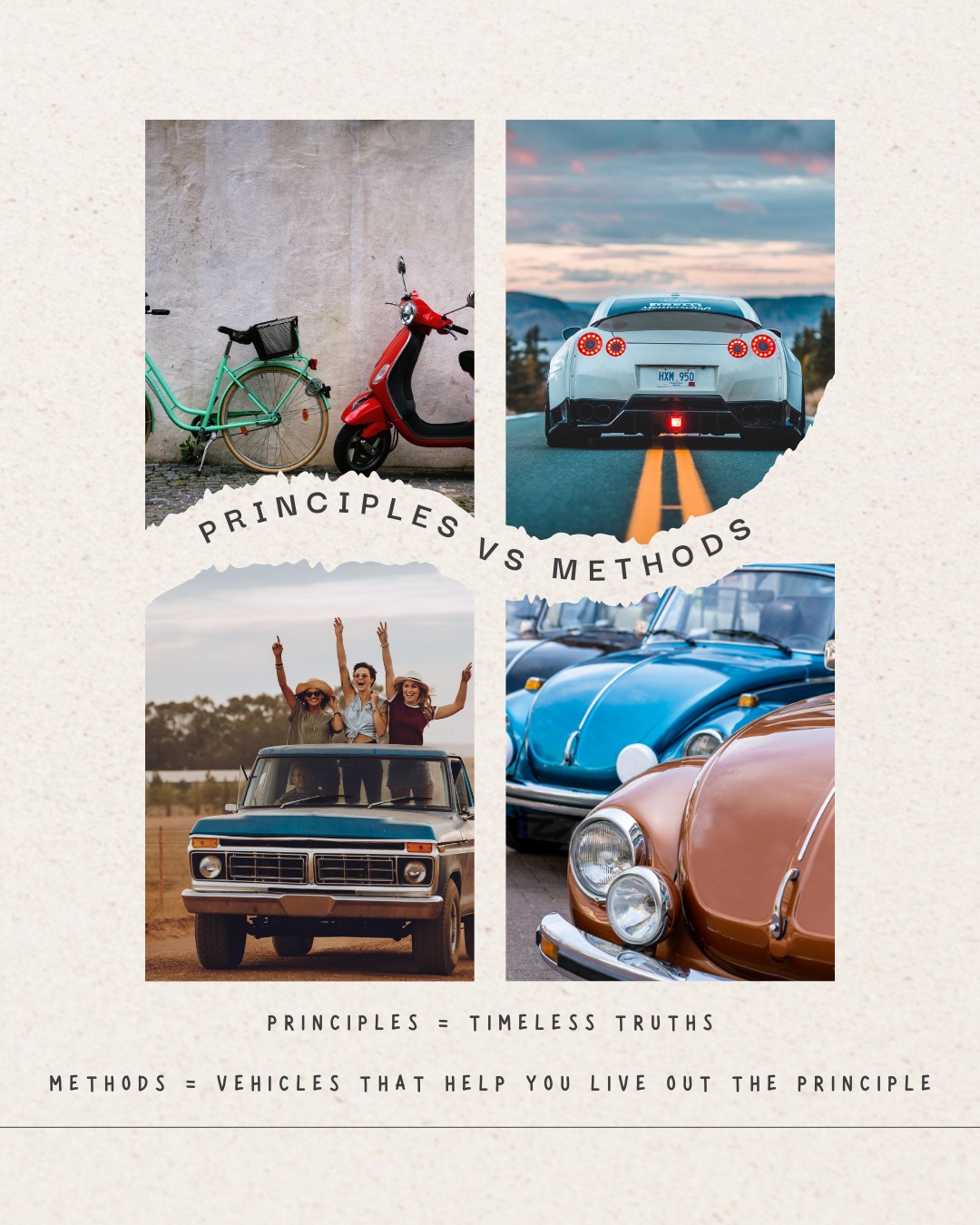

 This question takes me back to growing up on a farm…
 The cab was two shades of green—the light sandwiched between the dark—and the bed, which came from a different truck, was two shades of brown. With no muffler, when you pressed the gas it roared so loud you could hear it from miles away.
 ) through my rural hometown (population 195)—flooring it so the whole town knew I was coming
  .
.


 , an empty nester might love the freedom of a convertible
 .
. British mathematician George Box once said: “All models are wrong, but some are useful.”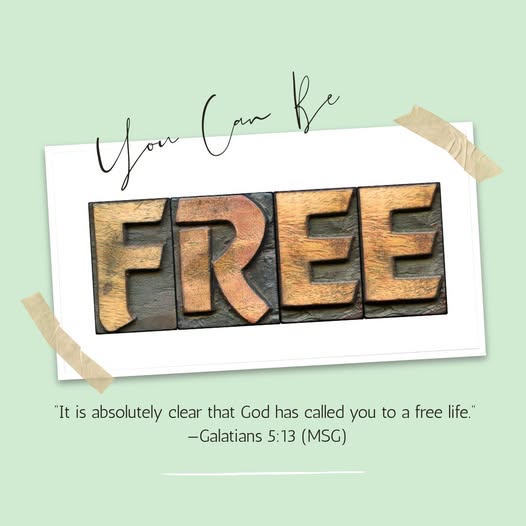
 as a memory aid to help keep it clear in my head, and I share it in case it helps you too.
 Think of Freedom 201 {Sanctification} similar to the oak tree. What began as a small acorn matures, grows strong, and eventually bears abundant fruit.
 My prayer is that as you read, you’ll find hope that freedom is possible for you too.
 Why Peace with Food Matters
 Quick disclaimer:
 10 Years Later: Here’s Where I’m At

 Get a Coach for Your Specific Need
 Mindset Renewal

 ), I kept hearing my mentors talk about the power of taking small steps paired with consistency. Their wisdom was solid—and the principle behind it came straight from Scripture. Luke 16:10 says, “Whoever is faithful in very little is also faithful in much.”

 Total analysis paralysis.
 My Power Duo

 Continually Upgrading Eating Habits + Supplementation
 GLP-1* + Reverse Dieting + Fasting
 )
) Later came Atkins, Paleo, and Keto.
 It wasn’t until I hit 2400 that I started to see the scale move up.
 Build & Preserve Muscle and Bone Density
 Measure Body Composition, Not Just Weight
 A DEXA scan—considered (by some) the gold standard for measuring body fat, muscle mass, and bone density—available at some medical offices or wellness clinics.
 An InBody scan or similar body composition analyzer—often available at gyms, wellness centers, and some functional and traditional medicine clinics.
 Even a home scale that estimates body fat and muscle % (though less accurate) can help you monitor trends over time.
 Optimize Hormones + Thyroid
 Fasting + Prayer =
  Get Help From God
 Threading It All Together
 Systems Make It Stick

 Women in perimenopause and beyond (estrogen decline accelerates bone loss)
 Focus on adding more whole foods—especially calcium-rich sources (target ~1,200 mg/day of calcium, or as your practitioner advises)
 Supplement to fill gaps:
